
Just outside Munich lies Dachau Concentration Camp Memorial, one of the most significant and sobering historical sites in Germany. A visit here is not a typical sightseeing experience—it is an act of remembrance and learning. Dachau confronts visitors with the realities of Nazi persecution and serves as a place to honor the victims while reflecting on the responsibilities of memory.
General Information
Today, Dachau functions as a memorial and museum, preserving original structures and historical documentation.
- Location: Dachau, approx. 20 km northwest of Munich
- Type: Memorial site and museum
- Focus: Victims of National Socialism, historical education, remembrance
- Atmosphere: Quiet, reflective, and respectful
The site is extensive and largely outdoors, with exhibitions housed in former camp buildings.
Historical Background
Established in 1933, Dachau was the first concentration camp created by the Nazi regime and became the model for all others that followed. Initially intended to imprison political opponents, it later held Jews, clergy, Roma, homosexuals, and many other groups persecuted by the regime.
More than 200,000 people were imprisoned at Dachau and its subcamps. Tens of thousands died due to starvation, disease, forced labor, medical experiments, and executions.
In April 1945, Dachau was liberated by American forces, exposing the scale of the crimes committed there. In 1965, the memorial site was officially established to ensure that the suffering endured at Dachau would never be forgotten.
What You Will See
Visitors to the memorial encounter a carefully preserved and documented site, including:
- The camp gate with the infamous inscription “Arbeit macht frei”
- Former prisoner barracks and reconstructed living quarters
- The roll-call square, where prisoners were forced to stand for hours
- Exhibition buildings detailing the camp’s history and victim groups
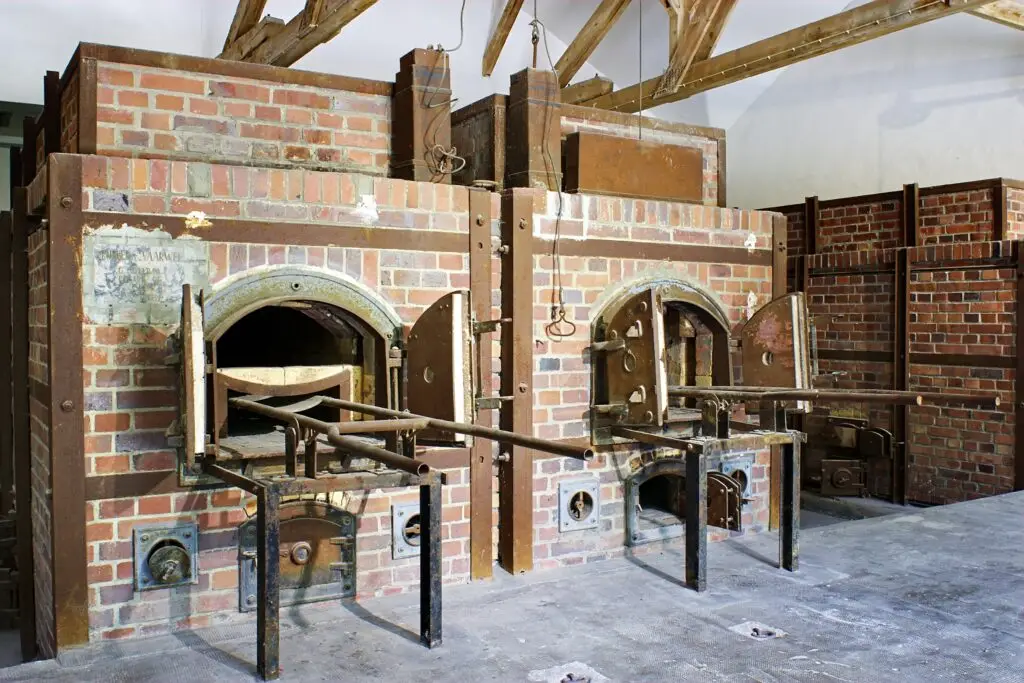
- The crematorium and memorial areas, places of quiet reflection
Each section contributes to a comprehensive understanding of the camp’s function and impact.
How to Get There
- By public transport:
- S-Bahn S2 from Munich to Dachau station
- Bus 726 directly to the memorial site
- By car:
- Approx. 30 minutes from Munich
- Guided visits:
- Available through educational institutions and licensed guides
Public transport is the most commonly used and convenient option.
Admission & Practical Information
- Entrance: Free (donations encouraged)
- Audio guides: Available for a small fee (approx. €4–6)
- Guided tours: Offered by external providers and educators
Good to Know
Crowds: Mornings and late afternoons are generally quieter
Time needed: At least 2–3 hours
Dress & behavior: Modest clothing and respectful conduct expected
Photography: Allowed in most areas; avoid inappropriate or staged images
Accessibility: Large parts of the site are accessible; some historic buildings may have limitations
Visiting with Awareness
A visit to Dachau can be emotionally demanding. Visitors are encouraged to move at their own pace, take breaks when needed, and approach the site with care and reflection. Reading background information beforehand or joining a guided tour can help provide important historical context.
Final Thoughts
Dachau Concentration Camp Memorial is a place of memory, warning, and responsibility. It confronts visitors with the consequences of hatred, authoritarianism, and indifference—while honoring the lives of those who suffered and died there.
At VisitBavaria, we regard Dachau as an essential site for anyone seeking to understand Germany’s history honestly and thoughtfully. It is not an easy visit, but it is a necessary one—one that leaves a lasting impression long after you leave the grounds.